

• Skip to primary navigation
  • Skip to content
  • Skip to primary sidebar
  • Skip to footer

SkinTrack

  • Lightest Gear
    • Skis
    • Boots
    • Bindings
    • Skins
    • Packs
  • Skimo Training
    • Training Plans + Skimo Manual
    • Transitions Videos
  • Facebook
  • Instagram

Skimo Training: How to Transition to On-Snow Training

October 12, 2016 By Stano Faban Leave a Comment

Summer is firmly in the rear view mirror and the days are starting crisp and dark. Snow is flying in the mountains and, depending on where you live, it’s time to finally start skiing. Before you do, here are our tips to make the transition as seamless as possible.
» Previous article in this series – Skimo Training Series: Training tips for September-October

1) Inspect your gear

Make sure the skis are in good shape and freshly waxed. Look for compressed edges and water damage. Inspect your bindings carefully for cracks, worn out heel pins, and check that all the screws are tight. Do necessary repairs to boot liners and check the shell rivets to make sure they are snug. Make sure that your bindings are adjusted to your boots – this is obvious but from time to time even the most diligent people get surprised some times 😉
Finally, and perhaps most importantly, diligently inspect and test your safety gear and make sure your shovel and probe are in working order, and that you have fresh batteries installed in your beacon and it works.

2) Pick the right location

All it takes is one well aimed storm and it can be game on. The best early season skiing is typically at higher altitudes and on permanent snow and ice or on smooth alpine slopes at ski areas. Paved or logging roads are also a good option as they don’t require much snow to be skiable. While glaciers give the best chance for skiing with minimal snow cover they also provide objective hazards. Crevasses can be thinly bridged and exposed ice can break ankles as Stano experienced two years ago.
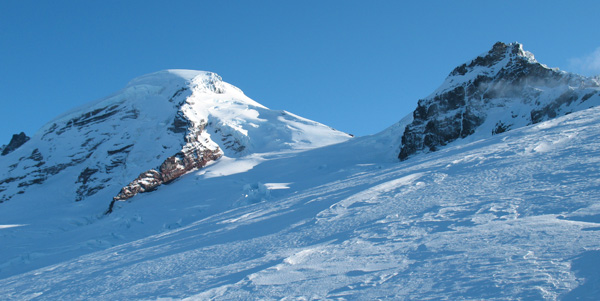
Our early season ski attempt on Mount Baker (3,285 m), or Kulshan in native, couple of years ago didn't very well - unexpected frigid temperatures, wind-scoured glacier, and short day light had us turn around 400m below summit.
Our early season ski attempt on Mount Baker (3,285 m), or Kulshan in native, couple of years ago didn’t go very well – unexpected frigid temperatures, wind-scoured glaciers, and short day-light had us turn around 400 m below the summit.

3) Ease into it

Your first few ski sessions should be easy distance affairs. Hold off on the intensity until your body has time to adapt to the new training stress.

4) Prepare your body ahead of time

Let’s be honest, #3 is never going to happen. So to make up for that first, glorious 4-5 hour ski day (plus some hiking), make sure you adapt your training plan in the lead up to snow flying. Take a look at our previous post in the training series, as well as our training Skimo Manual and incorporate the following tips:

  • 1-2 roller-ski sessions per week will help strengthen muscles that have gone unused since spring.
  • Include poles on uphill training sessions to prepare your triceps.
  • Specific strength training should include:
    • Back extensor muscles should be targeted during core training.
    • Ski specific movements such as single leg squat should be incorporated into power training sessions.
    • Axial loading exercises should be incorporated into strength and power training sessions (squat, deadlift, cleans, snatches).

 5) Focus on quality recovery

Increasing training hours and training in colder weather increases the overall stress on the body. Immune function can be compromised so it is important to balance this stress with a renewed focus on recovery and nutrition. Fuel properly during and after workouts and avoid the chill!

6) Low angle skinning

As you transition from running shoes onto skis your legs and body will take some time to adapt. During this transitioning period, low(er) angle skinning is preferable as it is less taxing physically, thus, allowing for better technique and higher stride frequency. Once your body adapts, after couple of weeks or 6-8 sessions, you will be able to sustain good technique on steeper gradients as well.
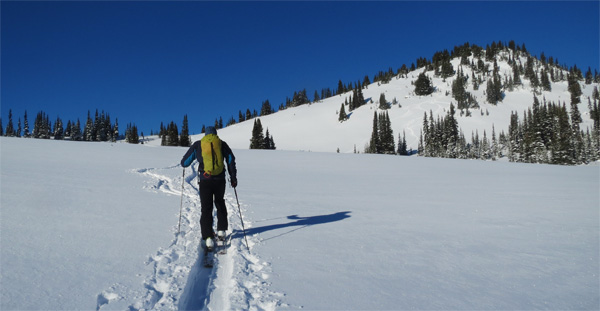
low-angle-skinning
Ability to sustain high stride frequency is necessary for skimo racing because the light gear allows it. Practicing it in the early season by skinning low angle terrain will set you up for success later on.

Filed Under: Training, Tricks & Tips Tagged With: roller-skiing, skimo training

Reader Interactions

Leave a Reply Cancel reply

Your email address will not be published. Required fields are marked *

Primary Sidebar

  • Facebook
  • Instagram
  • YouTube
Our Facebook Page

skimo-manual-banner-300px
 

Recent Articles

  • Kilian Jornet Interview: About His New Foundation, His Own Environmental Impact, and How He Wants To Help Athletes and The Outdoor Industry To Protect Nature
  • How Fast Are Glaciers Really Melting? How Will This Affect Your Mountain Adventures? Interview with Pascal Egli
  • Book Review – Art of Freedom: The Life and Climbs of Voytek Kurtyka
  • Forest Skis: Innovative, Custom Build, For Backcountry Skiing and Freeride
  • Lighter and Completely Redesigned: New CAMP Ultralight Ski Mountaineering Ice Axes

Categories

  • Contests & Giveaways
  • Crazy Tracks
  • Events & Races
  • Gear, Tech & Food
  • General News & Articles
  • Industry Press Releases
  • Movies & Books
  • News Shorts
  • People (Interviews)
  • Racing 101
  • Reports & Results
  • Reviews
  • Skimo Racing
  • Training, Tricks & Tips
  • Trip Reports & Conditions

Footer

About SkinTrack

Travelling through snowy mountains on skis is like flying… and experiencing life at its core.

Gear reviews, interviews, adventures, contests, skills, skimo training, race reports – we connect you to all things related to self-propelled skiing.

SkinTrack.com, created by Stano Faban, was born out of passion for ski mountaineering and ski touring. Over the years, it has become one of the most popular ski mountaineering blogs in North America.

Recent Articles

  • Kilian Jornet Interview: About His New Foundation, His Own Environmental Impact, and How He Wants To Help Athletes and The Outdoor Industry To Protect Nature
  • How Fast Are Glaciers Really Melting? How Will This Affect Your Mountain Adventures? Interview with Pascal Egli
  • Book Review – Art of Freedom: The Life and Climbs of Voytek Kurtyka
  • Forest Skis: Innovative, Custom Build, For Backcountry Skiing and Freeride
  • Lighter and Completely Redesigned: New CAMP Ultralight Ski Mountaineering Ice Axes

Useful Links

Comparing the lightest: Skis | Boots | Bindings

Skimo Training: Training Plans | Videos

Stay in Touch

  • Facebook
  • Instagram
  • Twitter
  • YouTube

Copyright © 2026 SkinTrack.com. All rights reserved.