

• Skip to primary navigation
  • Skip to content
  • Skip to primary sidebar
  • Skip to footer

SkinTrack

  • Lightest Gear
    • Skis
    • Boots
    • Bindings
    • Skins
    • Packs
  • Skimo Training
    • Training Plans + Skimo Manual
    • Transitions Videos
  • Facebook
  • Instagram

IOC

Interview with ISMF President about Skimo & Olympics and Anti-doping Efforts

December 2, 2016 By Stano Faban Leave a Comment

With many things going in the right direction for the sport of ski mountaineering racing, we reached out to Armando Mariotta – the president of the International Ski Mountaineering Federation (ISMF) – for an interview with 10 questions we were curious about.
We divided them into two sections – Future of our sport and its place within Olympics, and ISMF’s anti-doping efforts.
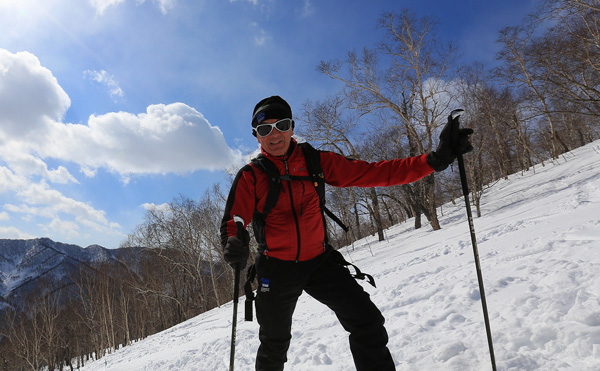
Armando-Mariotta
Armando Mariotta enjoying some quiet time in a skin track.

Future of Ski Mountaineering Racing & Olympics

Q: By IOC recognizing the ISMF this summer, skimo racing is one step closer to be an Olympic sport. What are the things that still need to happen for skimo to truly be in Olympics one day?
ismf-logo-300x120Just to be clear: the IOC recognition has been for the ISMF and not for skimo as a new Olympic Sport. With the full recognition we can now ask the IOC to accept our sport into next Olympic Games.
Q: Do you think skimo racing as a sport will be included in Beijing 2022 Winter Olympics? Also, would it be officially called “skimo racing” or “ski mountaineering racing”?
Our first effort is to enter the program of Youth Olympic Games in Lausanne 2020 and then we could ask to enter Beijing.
The name of the sport is clearly ski mountaineering.
Q: Which skimo disciplines are the most likely to make it into Olympics?
The first step will be to have an acceptance by the IOC for a new sport into the Winter Olympic Games and then we’ll discuss which discipline(s). As you know for example sport climbing had all the three disciplines but only one medal.
Q: ISMF recently renewed its media contract with Infront Sports & Media – a big sports media company that represents all seven Olympic winter sport federations, manages media rights for the FIS World Cup Events, and even represents big football/soccer teams. What does this mean for skimo?
The contract will give to the ISMF and to our sport many new possibilities to grow in the international TV visibility, a space to the organizers for their sponsors in the TV area range, some money to the ISMF and the possibility to have a Press Agent (Lucia Galli) for the institutional and sport press releases.
Q: What is the ISMF’s plan to encourage more youth participation in our sport? And what are your thoughts on growing our sport as a whole?
With the limited resources we have we are working for youth. For example, thanks to the collaboration of DAV and OSV from 8 to 11 December we are going to organize a youth camp in Austria for aspirant young athletes. In view of the work for the YOG we have new ideas and projects.
Q: Is it true that most of the ISMF personnel (staff, referees, committee members, etc.) are volunteers and receive no money?
You are right. All the members of the Executive Board, Management Committee, Commissions are volunteers as well as the Referee Manager and the Referees.
The only people paid are the Secretary (Giulia Avagnina), the director of the Sport Department (Rebecca Vernon) and the technical director (Gil Orriols).
You can completely read our 2015 accounts revised by the auditor on our Website www.ismf-ski.org – official documents section.

Anti-doping Efforts and Latest Doping Cases

ISMF has accepted WADA anti-doping code couple of years ago, thus, I would like to ask a couple of questions regarding anti-doping efforts in our sport.
Q: During World Cups and World Championships, does ISMF test athletes directly or does it coordinate the testing with a national anti-doping body in that country?
sportaccord-logoThe ISMF some years ago decided to sign an agreement with SportAccord as service provider for the anti-doping tests, so they organize directly all the controls.
Q: How many in competition and out-of-competition anti-doping tests does ISMF (on its own or through its partners) performs every year?
In the average the ISMF through its provider SportAccord does:

  • 28 In-Competition tests (28 Urine tests)
  • 81 Out-of-Competitions tests (36 Urine tests + 3 Blood tests + 42 Blood tests included the Athlete Biological Passport)
  • 17 Out-of-Competition blood tests covered by National Anti-Doping Organizations (NADO) as part of Athlete Biological Passport (ABP) sharing agreement

Moreover, the ISMF includes at least 10 top-level athletes in the Registered Pool Testing (RTP) every year.
Q: Were there any positive doping tests in skimo in the last 5 years? Where does ISMF publish this information?
There have been two Adverse Analytical Findings in skimo in 2015, if we consider the past 5-year-period: one RTP athlete in World Championships in Verbier, and one popular athlete in a La Grande Course race (long distance teams race).
Information about the first case was officially given with the press-release on 3rd December, 2015 which can be found at www.ismf-ski.org – News section.
Concerning the second case, another official communication will be published always in the news section of the ISMF website in the near future.
Q: How many Therapeutic Use Exemption (TUE) applications does ISMF receive every year? What percentage does usually get approved?
The 2016-2017 season will be the first one with the management of the TUE for the ISMF. In the past, it was a management of national federations, so we don’t have this type of information.

Our Thoughts

From one of the answers it is very obvious that our sport is still small despite so many great races and its history. It seems like the only way to grow is through becoming an Olympic sport because TV rights are where the money is – we wrote about this in regards to skimo two years ago.
With potentially more money coming into the sport in the future there will likely be a rise in the number of doping cases. This is just a fact and not only in sports but sadly in society in general. However, we believe that skimo will continue to be one of the best sports to put your children in.
What are your thoughts? Or questions you would ask? Please share them in the comments section below. Thank you.
Filed Under: People (Interviews), Skimo Racing Tagged With: Armando Mariotta, Doping & Anti-doping, IOC, ISMF, SportAccord

What if SkiMo becomes an Olympic sport?

May 25, 2014 By Stano Faban 20 Comments

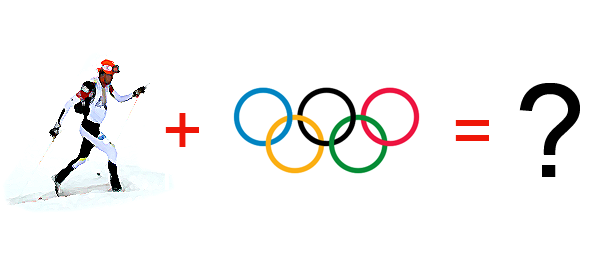
Back in April, most of us caught the news that the International Olympic Committee (IOC) granted a provisional recognition to the International Ski Mountaineering Federation (ISMF). This comes after about a decade of hard work from the ISMF and all national skimo federations who together are trying to get ski mountaineering racing back into the Olympics.
skimo_olympic_equation

What does the provisional recognition mean?

If you were getting excited about watching skimo racing on TV during the 2018 Olympics in Pyeongchang, South Korea then you can relax because that is unlikely to happen.
In my understanding, this is just the very first step for a sport to have a chance to be included in the Olympics in the future. First, the IOC recognizes there is a large enough organized sport; second, it observes and tries to figure out how is this sport salable for broadcasting; and finally, it maybe includes the sport in the Games.
However, even if the inclusion is looming, the IOC still has to consider whether to just add another sport or kick one out in order to include a new one. It’s business, no other way around it. Environmentally friendly sport or not, the ROI will have to make sense. (Unless some other federation/sport would subsidize it.)

What’s next? Broadcasting rights.

Since the ISMF has the IOC recognition now, we are onto the second step – observing and figuring out how to make skimo TV friendly. What I mean by that is the sport needs to accomplish couple of things to be right for (live) broadcasting:

  • attract enough audience,
  • based on which numbers broadcasting company can sell advertising,
  • which in turn brings enough money to pay for production and distribution costs,
  • and have some profit left over.

By now, you might be thinking why I am so focused on TV broadcasting as the only way of monetizing Olympic Games since we know there are other ways for sports to make money. And you are right, there are. But according to IOC revenue sources and distribution page selling broadcasting rights brings the IOC 47% of its revenue. Then 45% is from sponsorships, only 5% is from tickets, and 3% is from licensing.
If we take skimo and say “let’s a find a away to replace some broadcasting money with something else” we will quickly run into a problem. Who would the sponsors be? From what I know, from approaching outdoor companies with offers to advertise on Skintrack, they all have very little money, or so I am being told. That means, there would have to be some big players that are (also) involved in the outdoor industry to pay the difference. Could it be Salomon? Maybe. Black Diamond? Perhaps. Will it be enough? Maybe Adidas since they make some outdoor clothing.
But really, how much money are we talking about for broadcasting rights?
Just a few days ago, the IOC awarded NBC Universal the broadcasting rights (across all platforms) in the USA for the Olympic Games from 2021 to 2032 for $7.65 billion USD. There was also a $100 million signing bonus. And we are talking about the USA rights only.

What does this mean for skimo?

If we agree that a major decision factor, for skimo racing to make it into Olympics, will be whether it can attract large enough audience (advertising money) that will pay for the production costs then there are about two or three scenarios of how this will impact our sport:
1. Skimo stay as is – very unlikely:

  • Broadcasters figure out a super cost efficient way to film skimo races in all kinds of weather and terrain to off-set the not so big viewers demand.
  • Or the audience rapidly grows in the next couple of years to pay for the production and distribution.

2. Skimo changes drastically – most likely:
Unless the audience grows rapidly, broadcasters will need to lower their costs substantially and make it watchable for the masses. This can be pretty much done in only one way – by changing the sport until it fits the financial equation.
It is difficult to predict how big or small the changes would need to be but I wouldn’t be surprised if this meant lapping the same course (full length individual race) a couple of times and avoiding possible problematic terrain (alpine, etc.) in the process.
And why not have that as the first option on the table? Because after all, even the Olympic 50 km cross-country races are done on an amazingly short loops now:

The use of  short loops allows spectators in the stadium to see the contestants every 10-12 minutes. – quoting directly from Sochi Games website explaining the 50 km race

That means that during the Sochi 50 km skate (freestyle) race the athletes did 9 or 10 laps since the winner’s time was just under 1 h 47 min.
3. Skimo changes at least a bit – very likely:
Maybe the change will not need to be as dramatic as I painted above but it still will likely be considerable.

Are Olympics good for skimo? Why we want it there?

So with all this discussed, pretty much the only two questions that really matter are:

  1. Will Olympics be good for skimo?
  2. Why do we really want skimo to be an Olympic sport?

These are the most important questions we need to ask because they force us to look inside and evaluate our sport from its roots, to its current state, to its future. Answers will of course depend on individual values, priorities and motives.
As for myself, I am quite undecided about skimo as an Olympic sport but here are some of my thoughts:
If Olympic skimo should degrade to laps sport in unnatural terrain would it still be ski mountaineering racing as we know it? Aren’t we perhaps already half-way there but threading the line still on the good side?
For example, if we look at the sprint, I believe the discipline was invented to comply with the broadcasting “rules” I outlined above, thus, to please the IOC. Do I like the sprint? Kind of. Is it ski mountaineering racing? Definitely not.
Another one would be the vertical race. It has been shortened over the last few years and even a simple technical element such as boot-packing has been ruled out. Only skinning and no transitions are how verticals are done now. So, at its current form, how is it different from a cross-country ski race? Yes, it’s steeper but why not just use xc gear with skins glued on?
On the other hand, Olympics would bring lots of money which would make it appealing to more people – growing our sport significantly. Therefore, maybe we should be happy that more people would be participating in something we believe is the best sport in the world.
Ultimately, the only thing we can do is to watch carefully and demand change if we don’t like where skimo is going. Whichever direction we prefer.
What are your thoughts on skimo becoming an Olympic sport? I am very interested to read them.

Filed Under: Skimo Racing Tagged With: IOC, ISMF, Olympics

Primary Sidebar

  • Facebook
  • Instagram
  • YouTube
Our Facebook Page

skimo-manual-banner-300px
 

Recent Articles

  • Kilian Jornet Interview: About His New Foundation, His Own Environmental Impact, and How He Wants To Help Athletes and The Outdoor Industry To Protect Nature
  • How Fast Are Glaciers Really Melting? How Will This Affect Your Mountain Adventures? Interview with Pascal Egli
  • Book Review – Art of Freedom: The Life and Climbs of Voytek Kurtyka
  • Forest Skis: Innovative, Custom Build, For Backcountry Skiing and Freeride
  • Lighter and Completely Redesigned: New CAMP Ultralight Ski Mountaineering Ice Axes

Categories

  • Contests & Giveaways
  • Crazy Tracks
  • Events & Races
  • Gear, Tech & Food
  • General News & Articles
  • Industry Press Releases
  • Movies & Books
  • News Shorts
  • People (Interviews)
  • Racing 101
  • Reports & Results
  • Reviews
  • Skimo Racing
  • Training, Tricks & Tips
  • Trip Reports & Conditions

Footer

About SkinTrack

Travelling through snowy mountains on skis is like flying… and experiencing life at its core.

Gear reviews, interviews, adventures, contests, skills, skimo training, race reports – we connect you to all things related to self-propelled skiing.

SkinTrack.com, created by Stano Faban, was born out of passion for ski mountaineering and ski touring. Over the years, it has become one of the most popular ski mountaineering blogs in North America.

Recent Articles

  • Kilian Jornet Interview: About His New Foundation, His Own Environmental Impact, and How He Wants To Help Athletes and The Outdoor Industry To Protect Nature
  • How Fast Are Glaciers Really Melting? How Will This Affect Your Mountain Adventures? Interview with Pascal Egli
  • Book Review – Art of Freedom: The Life and Climbs of Voytek Kurtyka
  • Forest Skis: Innovative, Custom Build, For Backcountry Skiing and Freeride
  • Lighter and Completely Redesigned: New CAMP Ultralight Ski Mountaineering Ice Axes

Useful Links

Comparing the lightest: Skis | Boots | Bindings

Skimo Training: Training Plans | Videos

Stay in Touch

  • Facebook
  • Instagram
  • Twitter
  • YouTube

Copyright © 2026 SkinTrack.com. All rights reserved.