
• Skip to primary navigation
  • Skip to content
  • Skip to primary sidebar
  • Skip to footer

SkinTrack

  • Lightest Gear
    • Skis
    • Boots
    • Bindings
    • Skins
    • Packs
  • Skimo Training
    • Training Plans + Skimo Manual
    • Transitions Videos
  • Facebook
  • Instagram

Reports & Results

When suffering is fun: Recap from first ever Skintrack skimo training camp

September 16, 2013 By Stano Faban 7 Comments

And just like that, after a 3-day blurry of workouts, adventure, presentations and loads of fun the first ever Skintrack training camp is over! Everyone is tired but with a huge smile on our faces.
First of all, Eric and I want to say Thank You to everyone that attended, in some cases travelling hundreds of kilometres. You guys put faith in us and believed that when you show up the two skimo junkies will have no choice but to deliver all everything they promised 😉
Next, we (and on behalf of all participants) want to thank to Dynafit North America, Escape Route, Clif Bar Canada and The Alpine Club of Canada for their great support of this summer skimo training gathering.
Supporters of this first ever North American skimo training camp. On behalf of everyone - Thank You!

As it all happened

To recount our three days for those that couldn’t come, here are some facts:

  • 17 athletes attended, either the whole camp or couple of sessions
  • Another 20 or so attended the 2 speaker presentations
  • 5 training venues
  • Over 13 hours of training
  • Around 3700m of vertical
  • About 80km covered
  • And 1 birthday celebration

Day 1 – Friday, Sep 13

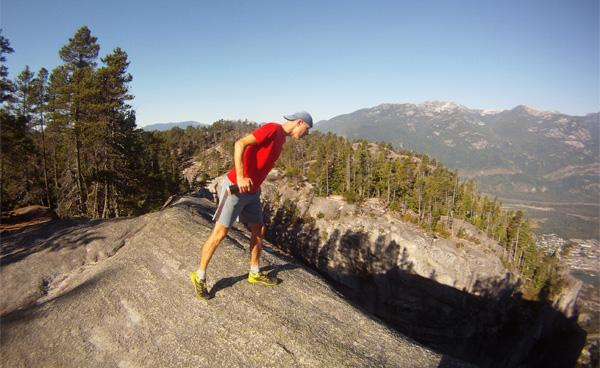
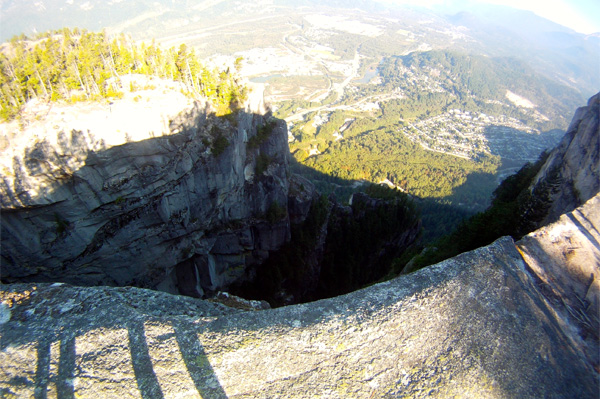
We started the camp off by meeting for a trail-running session up Squamish’s iconic Chief and over its three summits, amazing views all around.
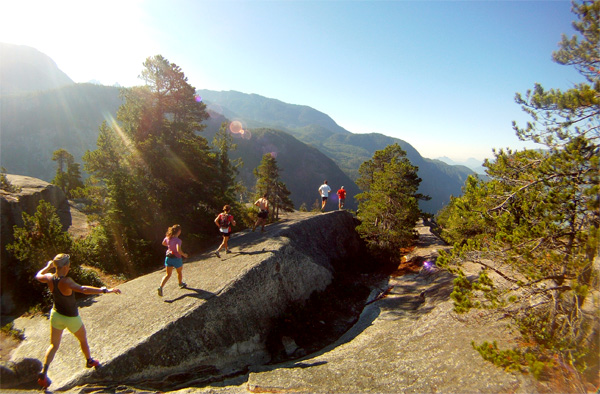
chief-run-squamish-1
chief-run-squamish-1a

chief-run-squamish-2

Afternoon brought us to Callaghan Valley for a roller-ski session. The valley is located between Squamish and Whistler, and was the venue for cross-country skiing during the 2010 Winter Olympics.
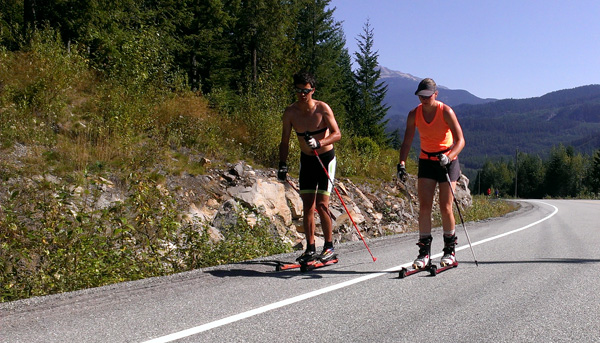
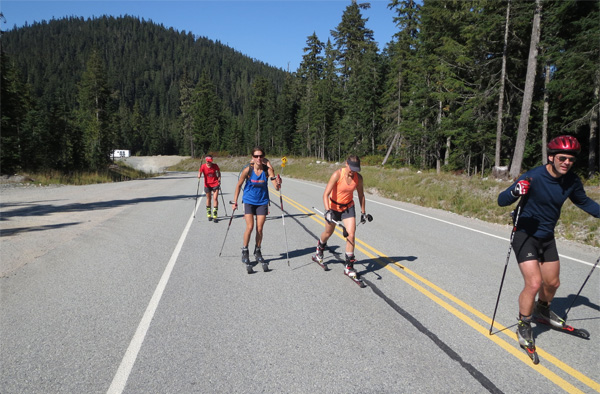
Eric Carter with Melanie Bernier roller skiing.
Summer skimo skinning - over the hills and far away.
Summer skimo skinning – over the hills and far away.
One the way to Callaghan and then back we made sure to take advantage of the lakes along the scenic Hwy 99. Cold water in two Alice and Brohm lakes relieved pain in our muscles while we soaked in September sun.
Friday’s night presentation belonged to a slideshow from my recent trip to Kyrgyzstan and China (here you can read part 1 and part 2) inside Escape Route outdoor shop. I am proud to say that everyone seemed to really enjoy it.
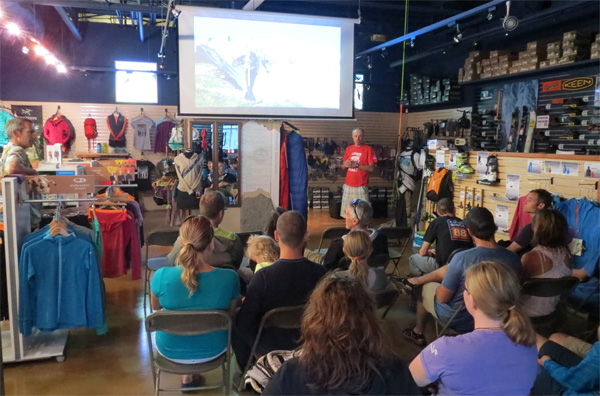
Escape Route proved to be a very cozy venue for the evening presentations.

Day 2 – Sep 14, 2013

Saturday’s itinerary was looking big and thankfully the weather held on.
In the AM hours our group swelled to 13 as we were joined by a group of athletes from the UBC Nordic ski team. Some people roller-skiing, some biking, (me driving) one by one we made it up Cypress Bowl road that brought us to 930m above sea level and to another 2010 Olympic venue, Cypress Mountain.
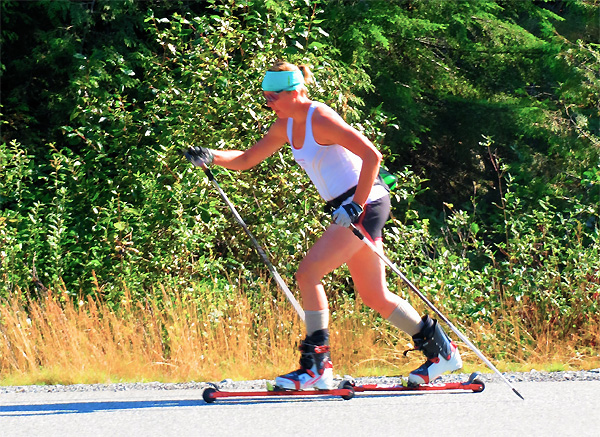
Melanie Bernier pushing the pace with great passion.
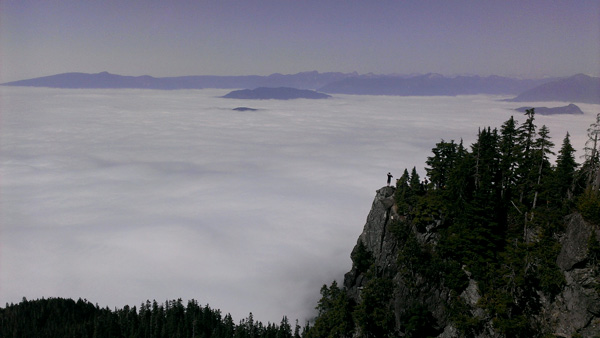
A very thick fog was sitting above Vancouver and the ocean at around 600m so we were treated to heaven-like experience.
lions-run-1
After some rest and a light lunch in the sun we started our long trail run from Cypress Mountain to Lions Bay. During this session we ended up splitting into three groups – one returning back the same way after about an hour (led by Eric), the second running to Lions Bay (3.5h), and the third, led by me, did a detour to scramble to the summit of West Lion thus extending the session to over 4h.
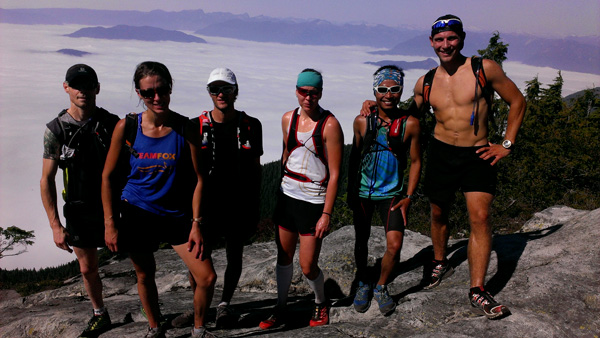
lions-run-2
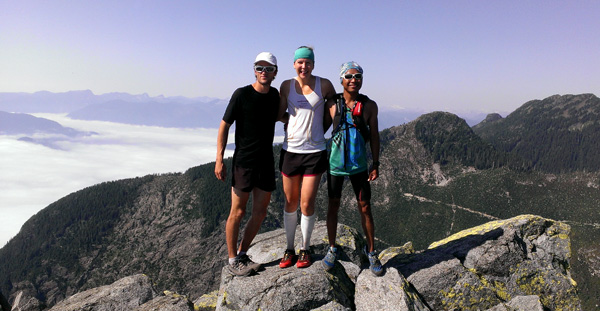
Posing for Sports Illustrated on top of Unnecessary Mountain on the Howe Sound Crest Trail.
lions-run-3
Nick, Mel, Dean and I pushed for the West Lion summit in the name of my birthday wish.
Later in the afternoon, we all met in Lions Bay and went for a plunge in the Pacific Ocean before heading back to Squamish.
The second night started with a sushi dinner before a presentation on performance nutrition from a professional coach Bjorn Ossenbrink. The take home message seemed to be that proper fueling and recovery are very critical to athletic success.
Right after the presentation I got a big surprise in a form of birthday cake (complete with candles) and a bottle of 7-year old red wine. Then to make sure we remember all that was said during the nutrition talk we headed to a pub for a round of birthday beers. 😉

Day 3 – Sun 15, 2013

Eric and I thought a strength session specifically targeting skimo muscles should be included in camp’s itinerary and so Eric arranged a coach and a gym from Challenge by Choice for 2h of suffer-fest given the training load on previous days. Muscles hurt but fun was had all around. This workout topped the most-sweat-lost charts.
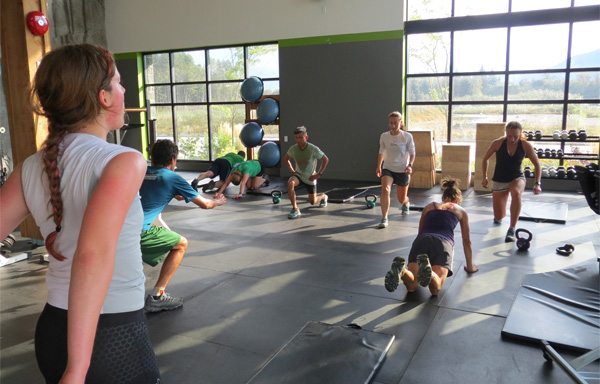
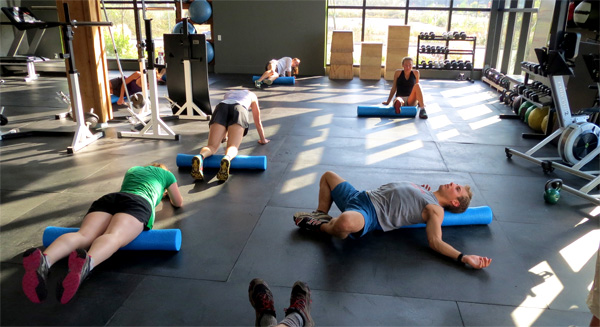
gym-session-1
Pretty much as a whole, we were accused by the gym coach of not having strong gluts 🙂

The final workout went almost as planned, only cut short by an approaching lightning storm. Yet still, we did about 3h of running over superb trails inside the beautiful Garibaldi Provincial Park.
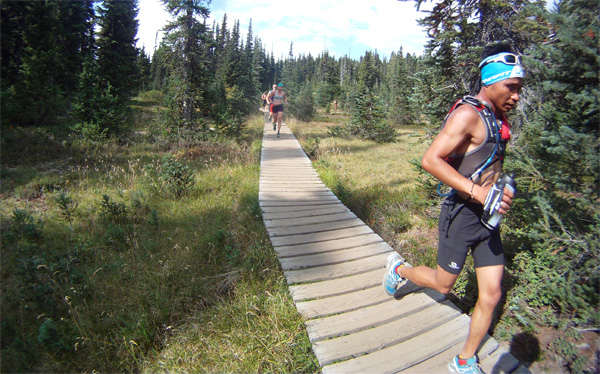
garibaldi-run-1

garibaldi-run-2
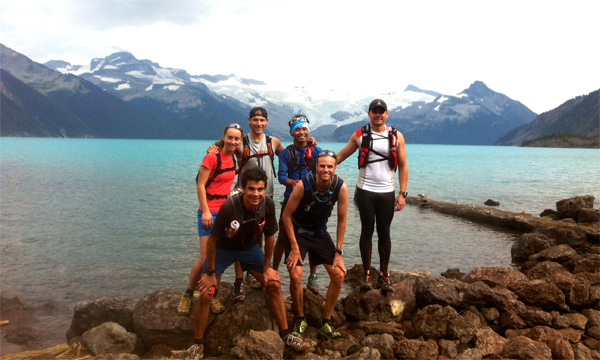
At Garibaldi Lake: from left, front row – Eric Carter and Will, back row – Kate, Eric, Dean and Max.
Once done and 50 hugs later, everyone took off in different direction in search of a couch at their homes.
See you all next time, we will try to make it as soon as we can 😉
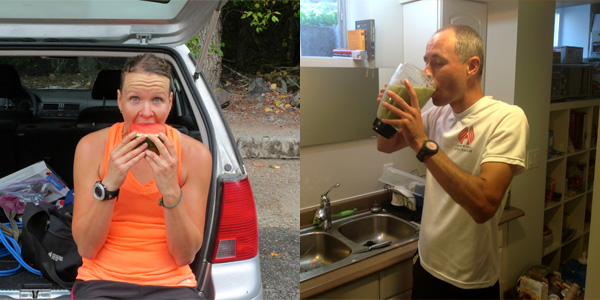
Nutrition, eh?
Nutrition, eh?

Filed Under: Reports & Results Tagged With: Cypress Mountain, Eric Carter, Garibaldi Provincial Park, Lions Bay, Melanie Bernier, Nick Elson, roller-skiing, skimo summer training, skimo training camp, Squamish, Stano Faban, The Lions

North Americans win the Atomic Waymaker 2013: Interview about their experience with this new format of ski mountaineering racing

April 11, 2013 By Stano Faban 4 Comments

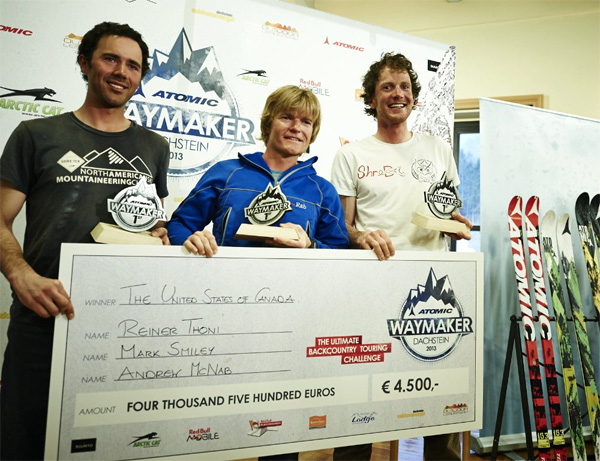
Big congrats to a team of three North Americans that won the first ever Atomic Waymaker challenge that took place over the weekend of April 6-7, 2013.
Reiner Thoni, Andrew McNab (both Canada), and Mark Smiley (US) named their team The United States of Canada  and went to take on nasty weather and other seven teams.

Reiner, Mark and Andrew with the big cheque!

Atomic Waymaker – atomic what?

Before we dive into the interview let’s define what the Waymaker did and what it didn’t aimed to be.
“The aim of the Waymaker is a perfect ski touring day” – claimed the official website. The format was refreshingly new.
It was a two day backcountry ski touring competition very different to any skimo race before.
Eight teams of three were let to tour freely within a predefined area. Each team submitted their own route plan, which they were expected to stick to, unless unpredictable conditions would render the route too dangerous.
The winning team was determined by a jury that assessed each team’s performance based on the following criteria:

  • Skiing – descent
  • Touring – ascent
  • Mountaineering – climbing
  • Data
  • Overall route

» For more details on how the Waymaker worked see this document – Atomic Waymaker 2013 rules and regulations (PDF).
And what Waymaker wasn’t?
The Waymaker was not a timed mass start race where the first guy/team across the line won. The route was not marked and there really were no check-points.

Interview with the winning team – Reiner, Mark and Andrew

Q: Only eight teams were going to be accepted to participate in this first ever Waymaker. How did you guys get in?
We applied with a short resume about our skimo racing and general ski mountaineering experience, as well as why we felt we would be good for the event.
Q: Where did this first edition take place? How big was the area where all teams were let to roam freely?
It was in the Dachstein region of Austria.  The area of the competition for day 1 went from the Odensee Lake in the east, then across the Dachstein Plateau to the Krippenstein Lodge.
Day 2 went from the Lodge into the peaks of the Dachstein and then out to Gosausee Lake to the west.
atomic-waymaker-fixed-rope
Q: It was a two day event. Were you sleeping in the backcountry or in a village?
On the night of day 1 we stayed at the Krippenstein Lodge at 2100m. The other nights we stayed at the sports complex in Obertarun.
Q: Did each team submit two routes (one for each day) or more?
One for each day with the ability to change the route depending on conditions.
On the Friday before the race we had to submit our plans for both days, but were able to change them in the field if we felt the conditions were not safe or if we did not think we were going to make it in time.
Q: Could your planned route be as gnarly as you wanted or the organizer had some input in that?
We could plan as gnarly of a route as we wanted, but points would be docked for taking excessive risks beyond a teams ability levels.  So it was not in your favour to go for anything too ridiculous.
On the Friday, we had to submit our route plans to the judges/organizers for review, if they felt that things were too risky they could say so and suggest changes.
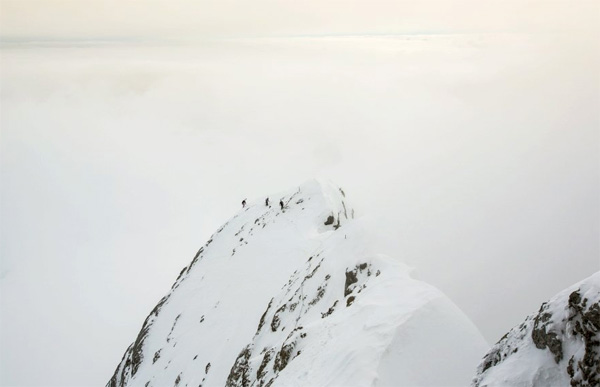
waymaker-on-the-ridge
Q: Did you choose your route only based on a map or did you get to know the area before?
For the few weeks leading up to the event we spent sometime looking at the area on Goggle Earth, as well on a topo map, which gave us a general idea of what the area looked like.
We came over to Austria on the Monday before the event and then spent the 3 days leading up to the event exploring the area as best as we could.
For the first 2 days we had very poor weather and could not see very much. But we gathered as much intelligence as we could and were able to come up with a pretty good game plan for day one, which was in the mellow terrain of the Dachstein Plateau.
We got lucky on our third day of recon. We had blue bird conditions and were able to get out into the Dachstein Peaks, which was awesome!  That really made the difference for us because we were able to find some really sweet lines and able to put together a good plan for the second day.
Q: What did you feel were your strengths compare to other teams?
We felt that between the 3 of us we had a very diverse skill set.  From strong being skimo racers to strong alpinists, all with solid endurance and good photography/story telling skills, and great passion for adventuring in the mountains.
We also spent a lot of time leading up to the event studying all the documents the organization had sent us, so that when it came time for us to do recon we knew what were looking for in terms of meeting all the outline judges’ criteria.
Q: What gear did you choose to complete your planned route with? Skimo race gear or other?
There was a mandatory gear list. We also then chose gear that we felt would make our team the most efficient at accomplishing the criteria the judges were looking for, as well as for moving the most efficiently through the mountains.
Mark and Reiner were on race skis to gain the advantage of efficient travel. Andrew was on a wider ski which worked well for trail breaking and for being able to ski strong which helped for photos.
Overall we tried to run as lite as we could and split the team gear the most efficiently to get the job done.
Q: Did organizers equip you with any other gear or tracking devices?
Yes, the organizations gave us:

  • 2 radios
  • 2 SPOT transmitters for emergency use
  • 2 Android phones with GPS tracking apps running which transmitted out location to the live tracking software
  • 1 Sony smart phone for taking pictures that was also linked to the GPS tracking app, so that we could up load our photos while we were racing to the live GPS tracking system

The photos that we took were used by the judges to evaluate our route and the lines that we choose, i.e. looking at the snow conditions and technical skills used.
The photos were a very important part of the competition for they are what told our story of the day.  The more creative and better the photos were the easier it was for the judges to understand our idea of what our “ideal” day of skiing touring was.
On day 1 we were also given 3 Go-Pro cameras and on day 2 we had 2 Go-Pro cameras.  They were for capturing images for the film crew to use in the video that they are going to make of the event.
We were also all give a Sunnto Ambit GPS watch, which was also used to track our movements in the mountains.

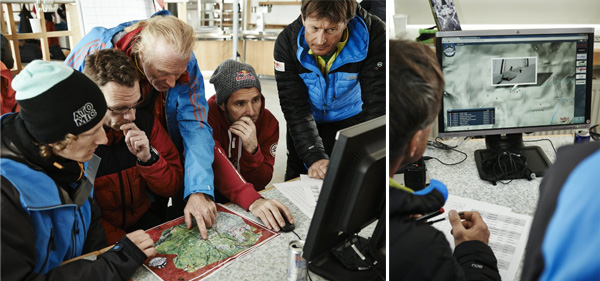
Waymaker jury closely following each team in real time.
Q: Did speed matter as well for the overall rankings or the jury wasn’t taking that into account much?
Distance and elevation gain was one of the 5 points that the judges looked at, but was not the most important aspect.

Day 1

Q: How was the start? All teams together but each running in their own direction?
The start was done in 1 min intervals. 6 teams went a similar way, up the first climb. We went a different route, up through the trees, but all ending up at the same first high point, and then we all went off into different directions again.

Team United States of Canada climbing strong on day 1.
Q: After couple of sunny days some nasty weather came in for the first day of the Waymaker. How was your navigation? Did you have a designated navigator or all of you were involved?
We were all involved in the navigating and the route planning.  We had 2 GPSes of our own (one of which was a Google Earth based system) as well as a 1:25,000 topo map of the area.
At times the navigating was very challenging because the terrain was rather rolling and undulating, with lots of little gullies and large winded features. Trying to navigate through this terrain with anywhere from 5 to 50 feet visibility was very challenging and rather draining.
Q: Approximately, how many kilometers and vertical metres did you travel on day 1?
About 30 km and 3100 m in 8.5 hours.
Q: How many ascents and descents did you do? Any steep or technical passages?
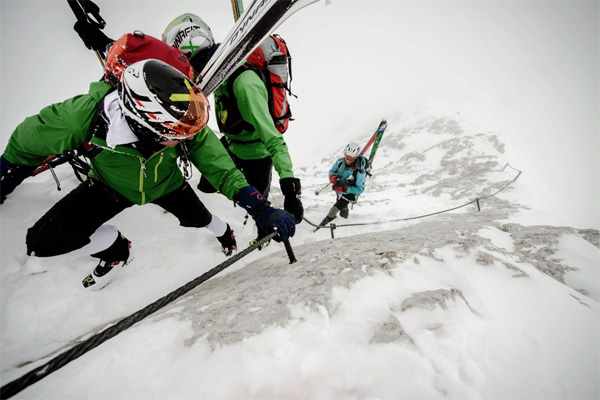
Five main descents and 6 climbs.  The second last climb was done up a fixed rope section on the Damuelkogel Peak, every team had to do this route in their day.
Mark on the fixed rope climb.
Q: What were the biggest challenges you faced during day 1?
Whiteout navigation. All the rest went pretty smooth.

Day 2

Q: Due to bad weather the Waymaker got terminated after few hours into day two. What were the weather and snow conditions like?
The race was cancelled after 6 hours of racing because on the final descent the visibility was approx. 1 metre and the snow was getting too warm and unsafe.
Q: How far did you get on your route that day?
We got over half way through our planned route.  We had attained our main objective, and were en-route to climb the main peak of the region when we were turned around 200 m from the summit.
Q: How did the termination work out with 8 teams out there? Were you picked up or they told you were to go?
We were told by radio that the race was over and that we were to return to the Krippenstein Lodge, where we had started that morning.

What did you think of the Waymaker?

Q: You pulled off a massive feat by winning it. Did you think you will be in the mix or was it a complete surprise?
We went into the event with the plan to have a good time and give it our all, with no real expectations or personal pressure.
Being that it is a judged event and a brand new format in a mountain region that we were not that familiar with it was pretty hard to tell, really, how it was going to all pan out.
Q: Going through it all (pre-race meeting, route planning, going out there…), what do you think of the Waymaker format and overall experience?
It’s a good format and worthy of replicating.  It felt like a good nature progression of the sport.
Q: Would you return?
For sure!
waymaker-team-climbing
Q: Obviously, the free use of terrain is very exciting; however, that severely restricts the number of participants. Because of that, do you think this format of “racing” is tough to grow? What is the real goal of the Waymaker?
By being a restricted entry it makes for a more elite field of competition, so that will help it grow.
Part of the reason for the Waymaker was to help bring the Atomic brand more into the backcounrty touring market and to create a new way to showcase the sport of ski mountaineering/backcountry skiing.  It has a lot more potential for media growth and exposure than a typical skimo race.
Q: Was there a sign-up fee or the big sponsors paid the bill?
Sponsors paid the bill.  Everything was covered. It was awesome; they took really good care of us, with great food and accommodation.  All the organizers were super friendly and welcoming.
Q: North America has amazing terrain for such event. Do you think the Euros might bring it here? Or should we attempt something similar on our own?
The organizers have dreams to hold this event again and would like to have it in different locations each year.  North America definitely has the terrain for such an event but it might be a lot more of a challenge to have it in NA due to litigation issues.
As well there is a lot more infrastructure in the mountains of Europe, which makes hosting of such an event a lot easier.
Q: Can’t end this without asking about Kilian Jornet who participated in one of the teams. He is The face for a lot of Atomic and Suunto advertising, two big sponsors of the Waymaker. Do you know, was it his idea for such an event?
The original idea for the event came from Heli Putz, whom was the head judge/chief organizer, as well as from Patrick Tritscher, who is the main man of marketing for Atomic.

Kilian Jornet with his teammates on day 1 of Waymaker.
Q: Another big sponsors were Artic Cat and Red Bull. Did they make you ride sleds and drink vodka fueled Red Bulls?
No sled rides but as many Red Bulls as you could handle.
Q: Do you think that such a format requires a much bigger organizational undertaking than a skimo race?
The overall costs of an event such as the Waymaker (therefore the organization of sponsorship and funding sources) are probably larger than a typical skimo race.
The organization of the event itself is probably at the same level of a skimo race. Because in a skimo race you need to have people setting a track and out on course to ensure that racers are staying on a course.  In the Waymaker, the only real reason that there were people on course was for media i.e. photo/cinematographers.

Would you try the Waymaker format?

Thank you for making it all the way here.
And what do you think of this new “racing” format for ski mountaineering / ski touring competition? Leave your opinion in the comments below.

Filed Under: Reports & Results Tagged With: Andrew McNab, Atomic Waymaker, Mark Smiley, Reiner Thoni

Recap of 2013 Canadian skimo racing season: Events, Participation, Rankings

March 28, 2013 By Stano Faban 2 Comments

Believe it or not, the 2013 Canadian skimo racing season marked 10 years of skimo racing in this backcountry skiing obsessed country.
For now, let’s take a close look at the most recent season but more details on the ten year summary are coming soon.
skimo-canada-logo

Events every month

Last Saturday, the Canadian racing season ended with its last event, Ken Jones Classic, held at Lake Louise.
The season’s opener, Vert 180, took place in December 2012 and was followed by Castle Mountain Skimo Race in January which brought ski mountaineering racing to this venue for the very first time.
Third weekend in February was traditionally reserved for ROAM Randonnee Rally at Whitewater Ski Resort. The race is always part of a larger event – Coldsmoke Powder Fest.
The biggest race on the Canadian and North American calendar was planned for mid-March when the classic Dogtooth Dash was relabeled to The GORE-TEX 2013 Continental Skimo Champs.
Last race on the calendar, a week after the Dogtooth Dash, was the above mentioned Ken Jones Classic.

Participation grows

This season was the biggest yet in terms of participation:

  • Overall, 171 people participated in at least one event which breaks down to
    • 119 male
    • 49 female
    • 2 junior male
    • and 3 junior female racers.
  • 55 racers (38 male, 17 female) completed at least one Elite race course, and
  • 31 racers participated in at least two events.

Canadian Skimo Cup

Points for the Alpine Club’s of Canada ski mountaineering competition rankings are collected by racing in the elite category (long courses). Best three results count where one out of the country race could be taken into account.
Top 5 for the 2013 season:

Men:

  1. Stano Faban
  2. Eric Carter
  3. Peter Knight
  4. Brad Schalles
  5. Ben Parsons
Women:

  1. Martha Burley
  2. Michelle Roberts
  3. Marg Fedyna
  4. Sheri Foster
  5. Amber Steed

» Complete rankings file – 2013 Canada Cup Rankings
 

Filed Under: Reports & Results

Report: The GORE-TEX 2013 North American Skimo Champs – Scott Simmons and Martha Burley clinch titles

March 20, 2013 By Stano Faban 3 Comments

What makes a skimo race great? It’s the ski mountaineering part.
After being consistently rated as the best race in Canada for past couple of years, the Dogtooth Dash, organized by Kicking Horse Mountain Resort and Ian Gale, was selected to be the 2013 North America’s skimo championships. And since consistently great work tends to pay off GORE-TEX® took notice and jumped aboard as the main sponsor!

Race course + conditions

Dogtooth Dash course is designed to include all technical aspects of ski mountaineering without going into absolute extremes. In total, about 80% of the elite course 1600 m (5200 feet) of climbing is spend in technical switchbacks and bootpacks. About 70% of skiing is in steep or free-ride terrain with couple of “better don’t fall” zones.
With storms passing over the Dogtooth range pretty much everyday leading up to the race the organizers had their hands full of work. At the end, they decided to leave out a portion of the original course and replace it with a variation of another lap up Terminator Peak. In my opinion, this made for even more technical route 🙂
Despite the change the total vertical and distance traveled stayed about the same.

How it all went down

As usual, the men’s elite race report is from my perspective but as objective as possible. For the recap of women’s race this time I asked Michelle Roberts (Michelle’s blog) to write the story for Skintrack.
» Elite race course results
» Enduro race course results
Traditionally, the Dogtooth Dash starts with a 100 m dash around the Eagle’s Eye restaurant at 2400 m. Then after a mad skis-on transition continues with a 3 min downhill leading into the first and very crowded skins-on transition.

Men’s elite race:

Recap from Stano’s perspective. I finished 7th.
Brad Schalles won the dash and also was first out of the skins-on transition after the first descent. He was tightly followed up the first switchbacks climb by Peter Knight, Scott Simmons (US), Eric Carter (US living in Canada), Nick Elson, me, Ben Parsons, Steve Sellers, Martin Lafontaine…
The second downhill and uphill were short but small gaps started to appear among the leaders.
When topping the second climb, and only about 20min into the race, I had to fully acknowledge that I am in for one hell of a suffer fest after feeling unusually tired for almost 2 weeks.
The third climb on this classic course is the longest, at almost 600 m, and has it all – switchbacks in tight trees, groomer, more switchbacks up an alpine bowl, then a couloir style bootpack preceding a top-of-the-ridge skinning section.
Right from the bottom of this third climb gaps started to open.
Nick and Ben were trailing Brad, Scott, Peter and Eric by about 10-15 sec.
By end of the bootpack Scott had taken over the lead with a commanding style. Eric was racing at his best with about 1 min behind. Then Peter and Brad following with another 30 sec behind him and between each other.
I started to loose serious time during this climb, even stopping to stretch out my stiff shoulders and legs. I was simply in a state of some kind of a muscle seizure despite not breathing too hard.
Behind me, Martin Lafontaine was reminding me that skimo racing is full of novices with big engines developed in other sports. And knowing he is also a great skier I forced my brain away from negative thoughts to focus only on the very next few steps.

Women’s elite race:

Recap from Michelle Roberts‘ perspective. Michelle finished 2nd.
After the blur of spandex run I was in the lead speeding through the first descent; however, Martha Burley pulled ahead just before transition below the first climb.
While I struggled with my binding Martha took off with several racers behind including Katarina Kuba (a junior in the Enduro category) and I believe Heather Anderson as well.
I picked my way through people on the first ascent trying to catch up to Martha. On this climb, Marg Fedyna aggressively closed the gap as Sheri Foster and Karen McKirdy followed behind.
The second descent was steep and quick and Martha continued to hold the lead.
On ascent #2, I moved into second place as I went with full force up the short 120 meters keeping Martha in sight.  Not too far behind were Katarina and Heather.  Marg continued to close the gap.
Ascent #3 was the longest and, just like men, the women racers started to spread out.
Throughout this climb, I could see Martha ahead and I tried to slowly gain bit by bit on her. Behind me I could occasionally see Katarina and Heather.
At some point, Marg Fedyna pulled into third place, surpassing Karen and Sheri. This either happened on Ascent 3 or 4.
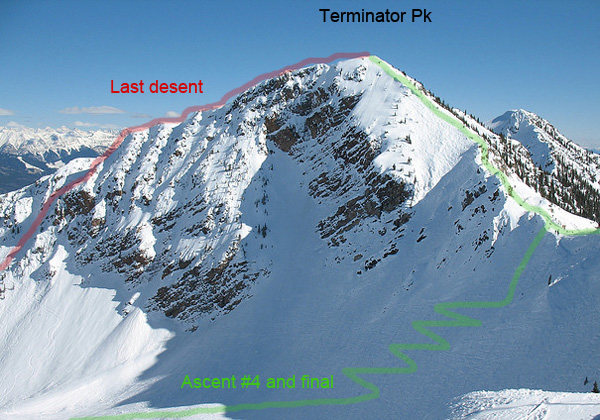
Ascent #4 ambled back up a bowl we just descended and led to a bootpack up onto Terminator ridge base, which was the junction between Elite and Enduro. Martha and I continued to plow through on the ridge to the Terminator Peak.
One of the Elite guys lapped me close to the summit, however, due to tunnel vision I cannot even remember which spandex suit it was. [it was me – Stano]

terminator-peak

On the two laps up and down Terminator Peak Scott was increasing his lead while Eric, Peter and Brad were still within short distance of each other. Essentially, a skin blow up or a fall in the descent would have shuffled the order again.
By the end of the last climb, that brought us back to the finish at the Eagle Eye’s restaurant, Scott Simmons carved out 3 min lead to Eric and became the new North American Skimo Champ. Eric had 1 min on Peter, and Peter 50 sec on Brad. That is a one tight race for medals!
Gaining Terminator Ridge, Marg in third, was mistakenly cut off and sent onto the Endure course.  Heather headed that direction as well.  Later on Karen and Sheri came to the same junction and were let through to continue on the Elite course.
Descent #5 – I followed male spandex suit for a split second, but got caught up in the sketchy rocky traverse.  Sheri managed to catch up a bit to Karen descending into super bowl, but Karen kept strong and kept ahead.
Ascent #5 and descent #6 – Order stays the same.
At the summit of Terminator Peak, I encountered a large party of snowboarders strewn about, vacating the already small space.  They quizzed me about the race, wondering why I was in running tights with tiny skis and then proceeded to cheer me on 🙂
I skied with minimal control and felt some burn in my legs. Brenda (race volunteer) continued to yell and cheer me on, ensuring I endure through the flail fest and the pain cave.
Final ascent – Martha, long gone out of sight, arrived at the finish line in first place.  Appearing a bit later I took second, while Karen came in third couple of minutes behind me.

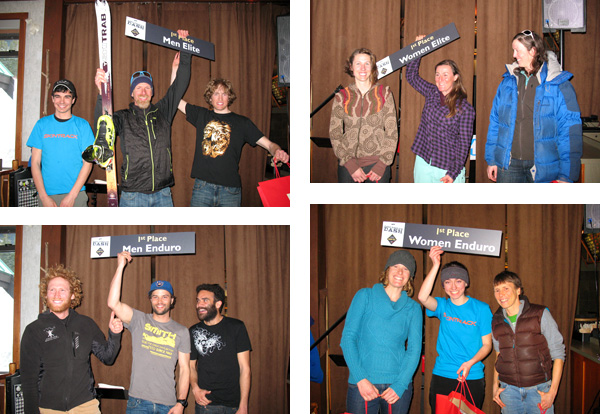
Final podiums at the Dogtooth Dash – The GORE-TEX 2013 Ski Mountaineering Championships.

Final podiums at the Dogtooth Dash  - The GORE-TEX 2013 Ski Mountaineering Championships.

Filed Under: Reports & Results

The 2013 Power of Four skimo race: One man’s three year evolution towards a unified team spirit

March 6, 2013 By Stano Faban 2 Comments

In this well written essay one of our fellow skimo racers, Jeremy Rietmann, shares his candid story of personal evolution that was forced upon him by a “simple” challenge of teams racing.
It’s always moving when people are willing to share their lessons, and especially so when they let us peek into their minds as deeply as Jeremy does here. Stick to the end and it will surely help you reflect on your own racing ups-and-downs.
jeremy-rietmann-300pxIn its inaugural year, Lou Dawson asked if Aspen’s Power of Four was the greatest ski mountaineering race in North America.  Dawson was hyping his local hill, but three years and 75+ racing miles later, I say it is.
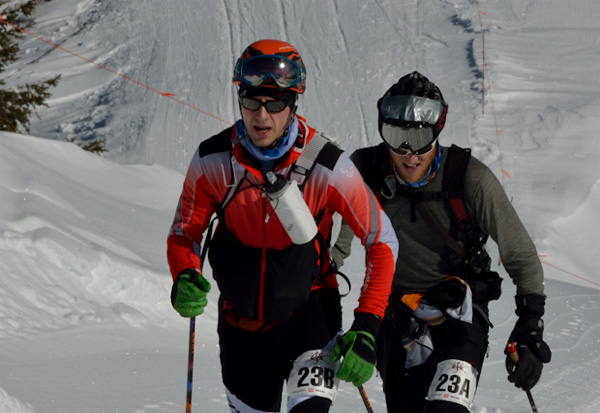
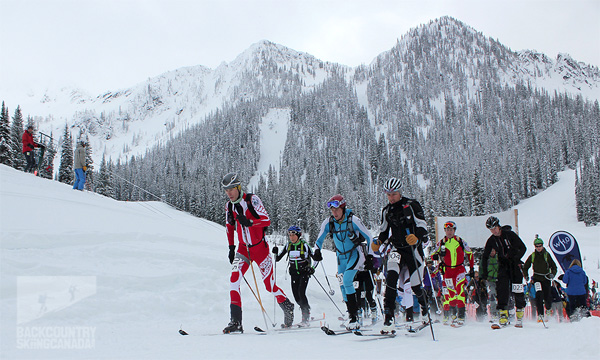
There are other North American races with more memorable technical elements, more off-piste terrain or offer better pure skiing. Nevertheless, the mental journey that one must navigate to successfully complete this race is more fascinating to me than the physical undertaking itself.
In the Power of Four, mastering your own mental landscape is the true test.  It’s the ‘Fourth Power’ that makes or breaks you when faced with the three major external challenges this race presents.

Race facts: The three challenges

First is the obvious physical hardship. Nearly 12,000ft of climbing over 25ish miles as fast as you can go is difficult. Pete Swenson found Karl Meltzer’s evil Speedgoat 50k race recipe and winterized it.
The second factor is that it’s March, high in the Colorado Rockies.  The ascent of Highland Peak, topping out at 12,382 feet, can be bitterly cold, yet the snow-reflected high-altitude sun could quickly have you overheating. You have to dedicate additional energy to self-care or simply Mother Nature will have her way with you.
And, it can never be forgotten that this is a skimo teams race! This means you get to go on a delightful journey of low-electrolyte self-discovery with another person doing the same. It’s best to realize this before toeing the starting line.
Each of these challenges build upon each other and can easily overwhelm an underprepared mind.

2011: Poor attention to details

In 2011, I came into the race not fully certain of what I’d gotten myself into. But, I had recently toured the 40+ miles from Eagle to Aspen in a quick overnight with a couple of friends, had a good build-up of training and was reasonably confident in my ability to finish.
I paired up with my regular climbing partner, Doug, and we set out not sure what to expect, but knowing we were in for an experience.
What occurred was an unfortunate – unbalanced pairing of expert mental toughness, internal mastery and proper self-care (on Doug’s part) versus my mental weakness, negative mental dialogue and inattention to the details (water and caloric intake in cold conditions) as minutes turned to hours and hours became several.
Unsurprisingly, I bonked hard mid-way up Midnight Mine road, and lacking a tow rope Doug pulled ahead to let me slog along in my own misery.  Only later did I realize he did me a favor by sparing me his own rage and frustration at my poor attention to nutrition.
Running low on fumes and good sense as we approached the Sundeck I decided this would be a good time to rant that it was not helpful that he had pulled ahead and “left me behind.” But Doug, as the true friend and real climber man-beast of the two of us, ignored my nonsense and we skied down to a respectable finish.
I crossed the line, but he allowed us the finish by dragging me along on his invisible tow rope made mainly of my own desperation in trying to catch up with him to give him a piece of my mind.

2012: Inside ego struggles

In 2012, after a better build-up of training, experimenting, and much more experience with long-endurance racing, I teamed up with another longtime college friend, John.
We went to have fun, work hard and finish strong.  But we were mismatched in a few aspects.
He was training around 25 hours per week (for off-road triathlons) and his general aerobic fitness was superior to what I could attain on my measly 5-10 hours per week.  Yet I knew my specific ski fitness was solid, giving me an advantage on the long down-hills. I also had better transition technique and had the advantage of having completed the race before. Added together, perhaps it could be a good combination after all.
We raced well up and down Snowmass and Buttermilk, but as we roped together with me on tow at the base of Aspen Highlands (as we had planned prior to the start of the race) my ego got the best of me.
My internal dialogue became more deluded with each step upward.  It created an internal conversation wholly toxic to our goals that day. My muddled mind argued: “Why are you struggling? I am the one who has been rando racing all season. I know the technique! I know the lingo!”
Useless.  All of it.
Then came the Congo Trail.  If there’s one thing I am very good at, it’s what I call ‘survival skiing’ – shitty, fast, narrow, scary, tree skiing.  And the Congo Trail is the definition of it.
I dipped in first and my earlier frustrations and inadequacies fueled me all the way to the bottom.  I didn’t look back.
I transitioned at the base of Midnight Mine road and waited. For 10 minutes.  Finally, John arrived upset and thoroughly pissed.  And I was happy to reciprocate.
John had been waiting for me at a road crossing just upwards from me. He didn’t know where I was and was concerned I may have wrecked somewhere uphill from him.  He also didn’t know the course as well, and didn’t know that the true base of the descent was straight across the road from where he was waiting for me.
Also, this is probably a good time to mention that John, my partner, is totally deaf.
It’s a pretty common theme in the Deaf Community that nothing frustrates a deaf guy more than being left out of a conversation or feeling out of the loop. Saying, “never mind” to waive-off the inconvenience of having to explain a super minor thing you have said to someone else in front of a deaf person is the height of rudeness.
So, as one might imagine, leaving your deaf partner behind on a fairly unknown race course was about a million times more inconsiderate.  Oops.
We had a healthy round of shouting, raging and f-bombs, all silently read on my lips by him mind you. And I did include the appropriate body language and facial expressions to be sure he knew where I was coming from.  He let me have it too.
We kept on moving and arguing until we exhausted ourselves, and then didn’t communicate for about 20 minutes.  Eventually I tamed my ego and went back on tow and with each step upwards we climbed back into reality, made peace, and found our way to the finish line.  One hour faster than the previous year with Doug.
Happy to have finished, but with far too much mental strain than was ever necessary.  I resolved to never let that happen again.

2013: Unified team and deeper lessons

In 2013, John and I again teamed up for the Power of Four.  We both had a desire to improve our time from 2012 and I think we both secretly wanted proper redemption for ourselves by tackling this race as a whole and unified team.

John and Jeremy racing the 2013 Power of Four. Together.
John and Jeremy racing the 2013 Power of Four. Together. Photo by Dick Jackson Photography.
I worked long and hard in the year between the two races to find and experience my mental state as it manifested itself during long, grueling endurance efforts.  I grew to be adept at finding it, viewing it within myself and not judging it.  I learned from it and eventually changed it.
2013 was a thrilling race. John knows I need reminded to eat and drink.  I know it too and have become much better at reminding myself.  So he cued it up when relevant, and I did the same.  There was no judgment, no ego, we just knew we needed to look out for each other to make a strong finish possible.
This year we climbed Aspen Highlands separately and didn’t pull out the tow rope.  We simply kept track of each other, reminded ourselves to fuel up regularly and planned ahead.  I carried less water than John and ran out at the top of the Deep Termity lift.  I knew this would lead to cramping and a potential bonk if I didn’t come up with a solution.
Knowing that I would transition faster than John, we agreed that I would ski down as fast as possible, skin to the entrance to the Congo Trail at the final aid station, and do everything in my power to rehydrate and refuel for the long brutal slog up Midnight Mine road.
It was a smart tactical decision. I got a good 10-12 minute lead on John, which gave me plenty of time to fuel up. When he arrived, I waited while he gathered up everything he needed to refuel and prepare for the remainder of the race.
Then, we skied down the Congo Trail – this time together.  John had only been on skis four times this season prior to the race, so the Congo completely destroyed his legs.  The endless wedging-in-the-back-seat isometric contraction sucked the life out of him.
As we started up the road, he began sweating profusely, wondering aloud what the symptoms of heat stroke were and I looked back and saw the panicked look of ‘bonk’ in his eyes.  But, this time we worked together rather than against each other and our minds stayed peaceful and calm.
He asked for the tow rope and we put one foot in front of the other at the same clip without pause all the way to the sundeck.
We even passed a couple of teams and crushed their spirits late in the race. We also finished yet another hour faster than the year before.  It was a beautiful thing.  A positive, powerful mental landscape makes everything in life better.

Struggles keep me coming back

This is what makes the Power of Four the best skimo race in North America.  It’s a monstrous undertaking that breaks a person down to the basics – keeping your mind calm, keeping your ego in check, empathizing with and recognizing the suffering of others, and recognizing your own weaknesses.
I got what I came for.  Overcoming difficult things pushes us to confront and accept even greater challenges in the future. It allows us the opportunity to become more than we once were.
This race, and all the training and hardship necessary to make it possible, has made me a better person.  And that’s what we should all be striving for.

Filed Under: People (Interviews), Reports & Results Tagged With: Jeremy Rietmann

Report: ROAM rando race at Coldsmoke Powder Fest on Feb 23, 2013

February 26, 2013 By Stano Faban Leave a Comment

Part of the Kootenay Coldsmoke Powder Fest, the 7th annual ROAM Randonnee Rally skimo race took place around the boundaries of the Whitewater Ski Resort last Saturday.
As always, the whole three day festival was a great spectacle thanks to very enthusiastic organizers, and with Mother Nature timing a delivery of 30+ cm of new pow to perfection, the day and night before.

Nelson randonee skimo race 2013.
Just after the gun went off. Photo by BackcountrySkiingCanada.com, permission pending.

New race course + conditions

For this year’s event, the ROAM Shop organizing crew stepped up the game and introduced great changes to the previous race course. These changes made the whole route more direct, more technical and very playful.
Weather was cooperating as well – mild temperatures, thin cloud, no wind, and amazing overnight powder.
However, all that new snow was giving a headache to the local ski patrol team, thus, the overall vertical gain was shortened to 1120m or 3700 feet (based on my watch).

As it happened

Women’s category highlights are written in italics.
After the start, we spent the first 5-10 min on a low angle cat track that delivered us out of bounds where all fun started.
Up and up, through old forest and glades, countless switchbacks took us on a broad ridge 450m above the Whitewater ski resort. Then an up-and-down ridge walk followed, with lots of snow eating on a short mandatory skins-on downhill.
As no one was super keen on taking the lead once off the line I went for it. I wasn’t totally sure what pace to set as I knew another battle with a strong Ben Parsons was going to be inevitable. Eric Carter and Ben sat right on my tails until I ate my share of snow on the skins-on descent. Eric took over with Ben and his friend Alan trailing, and me chasing right back to 2nd place in the first transition.
From what I learnt, it seems like girls had an equally entertaining first hour of racing, with the leading three – Martha Burley, Michelle Roberts, Marg Fedyna – staying closely together and as well feeding on the fresh storm snow.
» For more details on the women’s race see Michelle Roberts’ blog write-up
Out of the first transition I was leading again, carving big turns down an untracked slope, using the almighty skimo back-seat technique. Eric and Ben followed in the same manner, reaching the bottom transition about 20 to 40 sec behind.
Girls were settling their pecking order on this descent as well. Martha Burley is one hell of a skier and took control right away, leaving Michelle and Marg in a powder cloud. 
Next climb was about 400m and finished with a bootpack to gain another ridge, this time on the other side of the Whiterwater Resort.
Despite trying to open a bigger gap to Eric he was able to close it within 20 sec again as I had to set a fresh pow skin track for couple minutes before the bootpack. Ben was now trailing further behind. But it ain’t over until it’s over…
For girls, the race was decided on this climb with Martha slowly watching her gap grow with Michelle and Marg chasing.

Green light: Avy control hold up

After traversing the ridge with small up and downs we were supposed to traverse slopes below cliffs and above a big alpine bowl. Here, to my surprise, I caught up to a ski patroller that was about to set a bootpack for us. Clearly, he was surprised as well and instructed us to wait behind him until they finish ski cutting the bootpack chute.
Standing there with Eric we had time to joke about the situation, with Ben joining us for a chat soon after.
Couple of minutes later, a “slope testing” patroller finally emerged from behind a rocky rib giving us the green light. However, the light turned out not to be as green as he thought as Eric managed to bury him in a small slab soon after 🙂 He was OK 😉

Finishing the day off

After that, all jokes aside, the three of us decided to treat the order before the bootpack as the final result. Then Ben set us up with a bootpack as a pay back for earlier track setting.
I led the following short but treed descent with boys closely behind me, hitting surprising jumps one after another. I put the hammer down on the last climb just to finish off a great workout. Eric went with me while Ben’s skins let him down.
The last descent rewarded us with more deep powder turns and some fast chopped up “groomers”.

Results

Full results are coming soon.
Top men:
1. Stano Faban
2. Eric Carter
3. Ben Parsons
4. Martin Lafontaine
….
Top women:
1. Martha Burley
2. Michelle Roberts
3. Marg Fedyna
4. Katarina Kuba
…

Filed Under: Reports & Results

Great day for US and Canadian teams on day 1 of 2013 Skimo World Champs: Teams race summary

February 10, 2013 By Stano Faban 1 Comment

Today (Feb 10, 2013), the 2013 Ski Mountaineering World Championships in Pelvoux, France saw their first day of competitions – the teams race – for both women and men.
» Daily coverage archive

Top 3 Overall

Men
With a baby face and at only 22-years old, Mathéo JACQUEMOUD, claimed his first world title, racing for France in a team with very experienced William BON MARDION. Second place went to Italy thanks to again very experienced Manfred REICHEGGER and a younger Matteo EYDALLIN. Bronze went to another French team – Xavier GACHET and Alexis SEVENNEC.
Two minutes separated 1st from 2nd, and 2nd from 3rd on a course that had about 2500m. The winning time was 2:32:17.
Women
French also dominated the women’s category. Multi world champ, Laetitia ROUX, successfully “coached” her young teammate, Axelle MOLLARET, to gold. Second went to experienced Italian girls – Gloriana PELLISSIER and Elena NICOLINI. And third to another experienced pair this time from Switzerland – Maude MATHYS and Emilie GEX-FABRY.
The winning time was 2:59:45 over 2100m course.
» Full race results page is here, but some placings seems to be missing – http://ismf-ski.org/www/index.php?q=content/races-result&page=ListRacesAction&type=view&id_parent=88&id_parent2=&id_parent_parent=

US and Canadian teams

Men
It was a historical day for skimo in North America as the new US champ, John GASTON, along with his kamikaze-skier teammate, Max TAAM, raced to an amazing 10th place! This marks the first ever NA top 10 finish for men at a World Cup skimo competition. Their time was 2:58:54.
Second best NA team, at 15th place from Canada, were Reiner Thoni with Andrew McNab. This is a great result as the boys managed to go one higher than in 2011. Their time was 3:05:05.

After getting the best of the Slovenian team Reiner Thoni and Andrew McNab shaking hands with the rivals. Photo by Brad Schalles (http://westcoastskimo.blogspot.ca).
Rest of the teams finished like this:

  • 17th place for Luke NELSON with Marshall THOMSON (US)
  • 21st place for Tom GOTH with Andy DORAIS (US)
  • 22nd place for Scott SIMMONS and Greg RUCKMAN (US)
  • 28th place for Peter KNIGHT and Steve SELLERS (CAN)

32 or 33 teams raced.
Women
Another great result for North Americans here as well – Janelle SMILEY and Stevie KREMER finished 6th with a time of 3:24:55.
Then two novices from Canada, Martha BURLEY and Carla McKirdy, finished at 9th, with as well a novice US team hot on their heels at 10th place – Kim YOUNG and Mckenna DOUGLAS.
12 teams raced.
» Photos and official gossips for the US teams can be found here – http://www.ussma.org/blog/brackec/world-skimo-championships-team-race-recap

Peter Knight and Steve Sellers racing hard for the line. Photo by Brad Schalles.
 

Filed Under: Reports & Results

Report: Whitefish Whiteout skimo race on Jan 19, 2013

January 21, 2013 By Stano Faban 2 Comments

Last Saturday, the up-hill traffic friendly ski resort above Whitefish, MT hosted its 6th annual ski mountaineering race. The last couple of editions were also USSMA sanctioned.
The weather was great and the turnout even greater: 71 racers set the participation record for this event!

Stano Faban with Ben Parsons at Whitefish 2013 skimo race
Skimo racing is simply a friendly sport! Photo by Larry Parsons.

Race course and weather

For about 3rd or 4th year now the course is the same:

  • 4 ascents
  • 3 descents
  • total of 4800 feet of climbing  (my watch measured 1430m which is 4690 feet)
  • finish at the very top

The first climb is about 600m up fairly steep groomers with the remaining three ascents being quite technical, including a 50m bootpack on the third one.
The descents are true skiing with lots of steeps and technical sections, with occasional very tight trees in the mix.
Weather was race perfect: clear skies, around -5 C (23 F), and soft snow.

How it all went down

On the start line, it was obvious that the home town favourite, Ben Parsons, was set to face some stiff competition from a well represented Canadian team. But no one was sure how stiff given Ben’s athletic caliber; after all, he owns couple of wins at this venue.
The 600m vertical “dash” to the top of the first hill is always interesting as $50 are at stake. Brad Schalles snatched that prize with Ben Parsons and Peter Knight following him about 30-40sec behind. I came up there at 4th with another minute back.
In the women’s race the first climb and $50 were won by Marg Fedyna, followed by Jenny Pierce and Katie French.
From there on, the order really shuffled in both men’s and women’s racing categories.
In the first descent, I was able to close the gap to Ben and Peter slightly, with Brad already skinning when I got to the bottom transition.
As we were climbing up the technical 2nd ascent Brad was slipping slowly back as he broke his ski pole basket. Ben took over the lead as I quickly closed the gap to Peter. By the top of the climb I was able to bridged up to Ben. From there on, everything became a bit of a blur.
Ben led me down the 2nd descent in a speedy fashion, further putting time into our chasers. I got out of the transition first and led us up the technical 3rd climb that also featured a bootpack. By this time, we were eyeing each other trying to figure out how to win. By the top of this climb Brad was able to bridge to Peter with a spare pole from a 2011 US skimo champ Brandon French.
With me feeling good I came up with a tactic that didn’t pay off at the end. I let Ben take the lead on the last descent with my hypoxia blurred brain convincing me I could take him down on the final 4th climb. Once out of the technical section Ben opened up a sprint that I could not match.
Third and fourth place went to Brad and Peter respectively, with fifth going to a strong Bozemanite, John Curry.

Results

» Whitefish Whiteout 2013 ski mountaineering race results (PDF)
Top 5 men, AT racing, long course:

  1. Ben Parsons – 1:26.57
  2. Stano Faban – 1:27.10
  3. Brad Schalles – 1:30.27
  4. Peter Knight – 1:31.00
  5. John Curry – 1:34.59

Top 5 women, AT racing, long course:

  1. Niki Kimball – 2:00.46
  2. Katie French – 2:02.15
  3. Martha Burley – 2:06.20
  4. Michelle Roberts – 2:15.18
  5. Jenny Pierce – 2:19.47

Filed Under: Reports & Results

Report: Castle Mountain Skimo Race on Jan 12, 2013

January 14, 2013 By Stano Faban 2 Comments

Last weekend, Castle Mountain became a new fantastic venue for one of Canadian Ski Mountaineering Cup races. The resort and its cozy village is nested in the Southwest corner of Alberta, at the end of a mountain road, off the beaten path.
The race was announced quite late yet many people responded with enthusiasm and showed up ready to go hard.

Race course and How it all went down

The women’s category race highlights are written in italics.
The gun went off at very friendly 10am and even the reported -14C or so didn’t feel too bad.
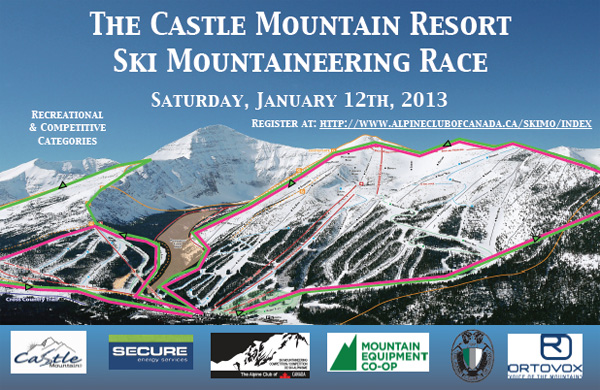
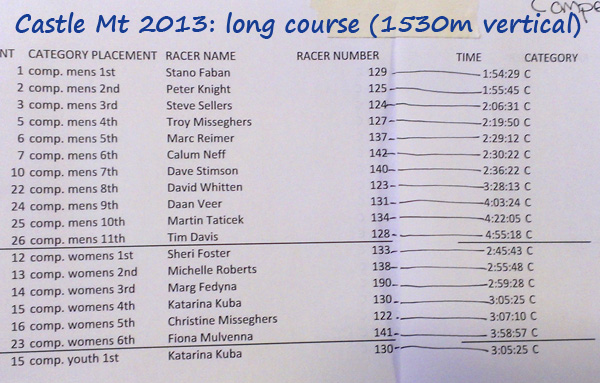
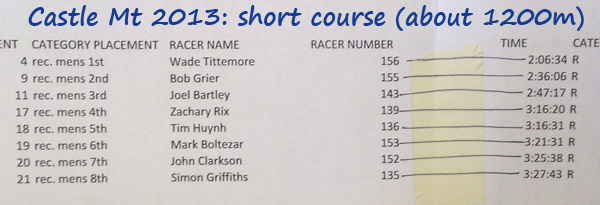
The race course pretty much followed the below planned routes to the letter with only few slight changes. My watch measured the long course at 1530m. The shorter rec version must have been maybe only 250-300m less.

Castle Mountain ski mountaineering race
Green line shows the competitive/elite course. Pink the recreational one. Both go counter clockwise.
Right off the start Peter Knight, this year’s addition to Canadian Skimo Team, proceeded to lead the race pack on fast skinning gentle groomers. The first 10min of the course were designed to give everyone space to jokey for positions before we headed onto a single skin track in the woods.
Just before the exit off the groomers I went hard to pass Peter for the lead. Behind, racers were quickly realizing what needs to be done before too much time is lost.
At this point, I believe the girls were pretty much together while the men started to spread out.
Next 20min were spent skinning up some 50 switchbacks through trees, alder, and bushes. But organizers did a very fine job of brushing this part for us.
After gaining a shoulder the trees opened up and some stunning views were all around us.
Rocky, fun, and long ridge-top bootpack brought us to the first real top transition. Here, Peter was able to caught up to me as I had to navigate my way up the ridge as all flags and tracks were blown off over night. I decided to set the bootpack up a more sketchy/steeper side of the ridge as that’s were there was less snow to break through.
The first descent (down Lone Star) was a true showcase piece of Castle’s terrain. A consistent 30-35 degree powder run plunging about 2000 feet to the valley bottom. For a second I thought I am in Rogers Pass but then a broken boot buckle reminded me I need to pay attention.
At this part of the race the top 4-5 girls were pretty much still together, however, Sheri Foster started to pull away a bit by showing off some great telemarking skills.
I had about 30 second lead on Peter out of the bottom transition which he amazingly closed in next 6-7min that climbed up a ski run to the top of Huckleberry chair. We spent the next 10min skinning together. Then I finally started to pull away again and quickly gained some good time as Peter paid for his earlier efforts.
From what I was told, this is were it started to be a full on fight between the girls. Sheri Foster pulled away for good. Michelle Roberts and Marg Fedyna were eyeing each other while a young 18 years old Katarina Kuba was trying to stay in contact. Christine Misseghers wasn’t far behind either.
The “nerve wracking” part came about 15min before what I thought would be the end of this final climb – I caught up to the volunteer who was breaking a skin track through powder to his check-point position. I went on to help out as he navigated me from behind. I couldn’t ski down without him showing me the route anyways. On the bright side, as Peter was closing on me again I had couple of moments to enjoy the views and rest my legs before the last amazing descent down cat skiing terrain!
Then onto a long traversing groomer to the finish at the base.
See you all next year!

Results

Long course (1530m vertical):
Castle Moutain ski mountaineering race 2013 results long
Short course (about 1200m vertical):
Castle Moutain ski mountaineering race 2013 results short
 

Filed Under: Reports & Results

Report and suggestions on racing at altitude and more: 2013 US Skimo Nationals at Jackson Hole and Grand Targhee Skimo Classic

January 9, 2013 By Stano Faban 4 Comments

After posting an article with Eric Carter on minimizing effects of altitude on skimo racing performance 2 weeks before it was time to test some of its preaching first hand.

What we did to “fight” the altitude

Due to time constraints our small group of Canadians (and an adopted Seattleite) headed to Jackson only two days before the biggest US race. (Eric recommends at least 4-6 days before a competition.)
16 hours in the car in a single push isn’t ideal either, however, at least it’s easy to stay well hydrated and fed since there is nothing else to do.
The key points of minimizing the alti effect that all of us stuck to were:

  • come well rested
  • come healthy
  • stay hydrated and fed at all times
  • do a short and easy skimo session (1h) the day after arrival to stretch out shortened muscles

The 2013 US Ski Mountaineering Championships in Jackson Hole

On Jan 5th, 8am start time meant sub -20 Celsius temperatures and had everyone struggling to warm up.
In our group, we were trying to figure out the best strategy to deal with a course that was set between 2000 to 3200m, with majority of it above 2500.
All of us were more or less happy with their result at the end and none had much trouble breathing during the race. Only above 2800m the feeling we shared was: “everything felt normal yet I couldn’t spin the legs as usual.”
At the end, Brad Schalles and I had a fierce last minute battle for the top Canadian stop and we finished 2 seconds apart, 12th and 13th respectively. Eric Carter and Igor Bernas came couple of minutes later at 19th and 20th.
Brad and I covered this high altitude (by our standards), very technical, 2450m course in 2h 51m 42sec which even two years ago I would consider impossible as we live between 0 and 400m all year round.
One thing that stood out to me was how great I felt up the last climb after descending back to 2000m from the very top of the resort. Acclimatization during the race?
Overall, I was amazed at performances the top 7 guys produced – they all finished within 3min 20sec while beating the previous course record by couple of minutes! Last year champ, Luke Nelson, even concluded that this was a longer and more technical course than the year before.
Europeans watch out, the gap is closing!
To top all that, the winner of the day (in 2:30.09) was a young John Gaston that apparently has some Body Miller’s descending skills. For obvious reasons I never saw him ski but those that did were impressed. Jason Dorais and Luke Nelson rounded the podium and qualified for the 2013 US National Skimo Team.
The average climbing speed would be quite inaccurate to figure out for a race with so many transitions but see below for Targhee numbers!
» Full results for 2013 Skimo Champs at Jackson
» Photo galleries are here

The Grand Targhee Ski Mountaineering Classic

On Sunday, Jan 6th, pretty much the same spandex crew lined up on the other side of Grand Teton for 1580m of more racing. Since this was again a qualifying race for the National Team the poker faces were on.
John Gaston was able to repeat the double-win that Canada’s Reiner Thoni pulled off in 2011 and he won on Sunday too, in 1h 36min sharp. Again, that is very a fine time given the vertical gain, altitude, and the fact he raced full out the day before.
I would estimate John’s average climbing speed was close to around 1170m/h after subtracting 15min off his time for skiing and transitions.
Behind him the order changed only slightly compared to the previous day, with Thomas Goth and Marshall Thomson coming in about one and a half minutes behind.
Brad and I once again battled to the very end. And again he got the best of me, this time by 56 seconds. We finished 11th and 12th. Eric and Igor 15th and 17th.
» Full results are here (few times appear to be wrong)

Women’s races

Not much to report here as Janelle Smiley won both races pretty comfortably and is looking good before setting on her World Cup campaign. Second places were different each day but the bronze was claimed back-to-back by a local Meredith Edwards.

More blog reports

Other racers has shared the above race experiences from their perspective:
Andy Dorais reports: Jackson, Targhee (excellent write up from first row seats)
Scott Simmons: Jackson, Targhee
USSMA blog: Jackson and Targhee summary

Is too steep, too technical the way to grow skimo?

To my surprise, for the women’s elite categories/courses, only 6 lined up for the US Champs and only 5 the next day at Targhee!
I wonder whether the courses aren’t somewhat responsible for this as both races start with wicked steep 15-20min groomers, and in Jackson Hole pretty much all the climbs continue up steep, slippery moguls.
Such type of terrain requires either great skinning technique and/or lots of upper body strength. This is not to say our skimo girls aren’t strong but rather to point out that maybe (many) participants do not return in the future because even the recreation division race courses were as technical and steep as the elite ones, but shorter.
Personally, I think such courses are OK for the elite men, and elite women too if they are shorter. But they are likely a bit too much for someone that is just trying out skimo racing or is only a very recreational backcountry skier. I don’t believe those people signed up for a 3h battle up and down slippery moguls. Or no?
Also, if the rec courses are more “skinning friendly” maybe the North American skimo scene can finally enjoy some interest from teenagers. Or no?
😉

Filed Under: Reports & Results

  • « Previous Page
  • Page 1
  • …
  • Page 6
  • Page 7
  • Page 8
  • Page 9
  • Page 10
  • Next Page »

Primary Sidebar

  • Facebook
  • Instagram
  • YouTube
Our Facebook Page

skimo-manual-banner-300px
 

Recent Articles

  • Kilian Jornet Interview: About His New Foundation, His Own Environmental Impact, and How He Wants To Help Athletes and The Outdoor Industry To Protect Nature
  • How Fast Are Glaciers Really Melting? How Will This Affect Your Mountain Adventures? Interview with Pascal Egli
  • Book Review – Art of Freedom: The Life and Climbs of Voytek Kurtyka
  • Forest Skis: Innovative, Custom Build, For Backcountry Skiing and Freeride
  • Lighter and Completely Redesigned: New CAMP Ultralight Ski Mountaineering Ice Axes

Categories

  • Contests & Giveaways
  • Crazy Tracks
  • Events & Races
  • Gear, Tech & Food
  • General News & Articles
  • Industry Press Releases
  • Movies & Books
  • News Shorts
  • People (Interviews)
  • Racing 101
  • Reports & Results
  • Reviews
  • Skimo Racing
  • Training, Tricks & Tips
  • Trip Reports & Conditions

Footer

About SkinTrack

Travelling through snowy mountains on skis is like flying… and experiencing life at its core.

Gear reviews, interviews, adventures, contests, skills, skimo training, race reports – we connect you to all things related to self-propelled skiing.

SkinTrack.com, created by Stano Faban, was born out of passion for ski mountaineering and ski touring. Over the years, it has become one of the most popular ski mountaineering blogs in North America.

Recent Articles

  • Kilian Jornet Interview: About His New Foundation, His Own Environmental Impact, and How He Wants To Help Athletes and The Outdoor Industry To Protect Nature
  • How Fast Are Glaciers Really Melting? How Will This Affect Your Mountain Adventures? Interview with Pascal Egli
  • Book Review – Art of Freedom: The Life and Climbs of Voytek Kurtyka
  • Forest Skis: Innovative, Custom Build, For Backcountry Skiing and Freeride
  • Lighter and Completely Redesigned: New CAMP Ultralight Ski Mountaineering Ice Axes

Useful Links

Comparing the lightest: Skis | Boots | Bindings

Skimo Training: Training Plans | Videos

Stay in Touch

  • Facebook
  • Instagram
  • Twitter
  • YouTube

Copyright © 2025 SkinTrack.com. All rights reserved.